One Nation, One ID: Understanding the Academic Bank of Credits
Imagine you are halfway through your degree but need to take a break for a dream internship or a family emergency. In the past, leaving college meant “dropping out” and losing all your hard work. But thanks to the Academic Bank of Credits, those days are over.
This digital revolution is changing how we look at degrees, making education as flexible as a bank account. Let’s dive into how the academic bank of credits works and why every student needs to pay attention.

Table of Contents
What is the Academic Bank of Credits (ABC)?
The Academic Bank of Credits is a digital platform established by the Ministry of Education. It acts as a “credit bank” for students. When you pass a course, your college deposits “credits” into this account.
Unlike a traditional marksheet, the academic bank of credits stores these units securely for years. This means your learning is never lost, even if you move to a different city or switch universities.
Understanding NEP 2020 and Its Vision
The ABC NEP 2020 initiative is the backbone of India’s new education era. The National Education Policy 2020 aims to move away from rigid, one-size-fits-all degrees. It introduces a student-centric model where you are the architect of your own curriculum.
Key NEP 2020 Benefits:
- Multidisciplinary Learning: You can study Physics along with Fashion Design.
- No Rigid Boundaries: The wall between “Arts,” “Science,” and “Commerce” is fading.
- Vocational Integration: Practical skills are now part of the formal degree structure.
ABC ID & APAAR: What’s the Difference?
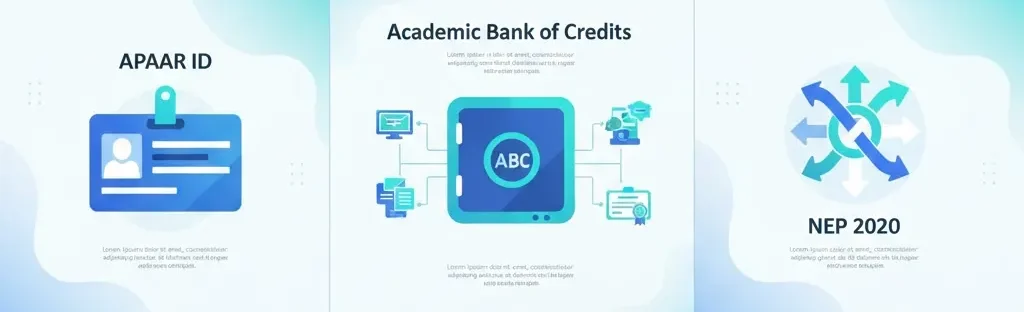
Many students are confused between these two terms. Think of it this way: APAAR ID is your “Account Number,” while the Academic Bank of Credits is your “Savings Account.”
- APAAR ID: This is a unique 12-digit lifelong ID for students. It stands for Automated Permanent Academic Account Registry.
- Academic Bank of Credits (ABC): This is the actual digital vault where your university deposits your “earned credits.”
APAAR ID vs ABC ID at a Glance
| Feature | APAAR ID | Academic Bank of Credits (ABC) |
|---|---|---|
| Full Form | Automated Permanent Academic Account Registry | Academic Bank of Credits |
| Purpose | Unique identification for tracking progress | Storing and transferring academic credits |
| Duration | Valid for a lifetime | Credits usually have a shelf life (up to 7 years) |
| Utility | Links all educational data | Facilitates credit transfer and mobility |

How to ‘Cash In’ Your Online Courses for a Degree
Did you know your NPTEL or SWAYAM certificates could count toward your college degree? Under the ABC NEP 2020 framework, education is no longer confined to four walls.
The academic bank of credits allows for “Redemption.” When you complete a course on an approved online platform, those credits are stored in your digilocker abc account. When you apply for a degree, your university can “pull” these credits from your digital vault. This creates a truly flexible education system.
The End of the ‘Drop-Out’ Stigma
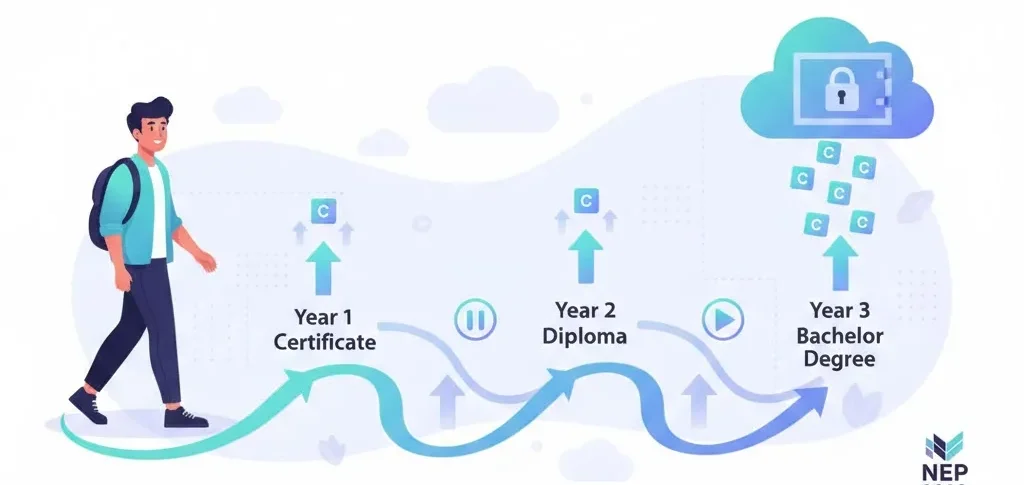
In the old system, if you left college after two years, you had nothing to show for it. The NEP 2020 benefits change this entirely. Through the academic bank of credits, “dropping out” is now replaced by “flexible exiting.”
How Academic Mobility Works:
- Exit after Year 1: Earn an Undergraduate Certificate.
- Exit after Year 2: Earn an Undergraduate Diploma.
- Exit after Year 3/4: Earn a Bachelor’s Degree.
Because your credits are safe in your digilocker for students, you can return five years later to a different institution. This is the true meaning of academic mobility.
Few insightful articles on Excel to improve your knowledge:
Step-by-Step: Creating Your ABC ID in 5 Minutes
Are you ready for the admission season? You will need your ID to fill out your forms. Here is how to get it done:
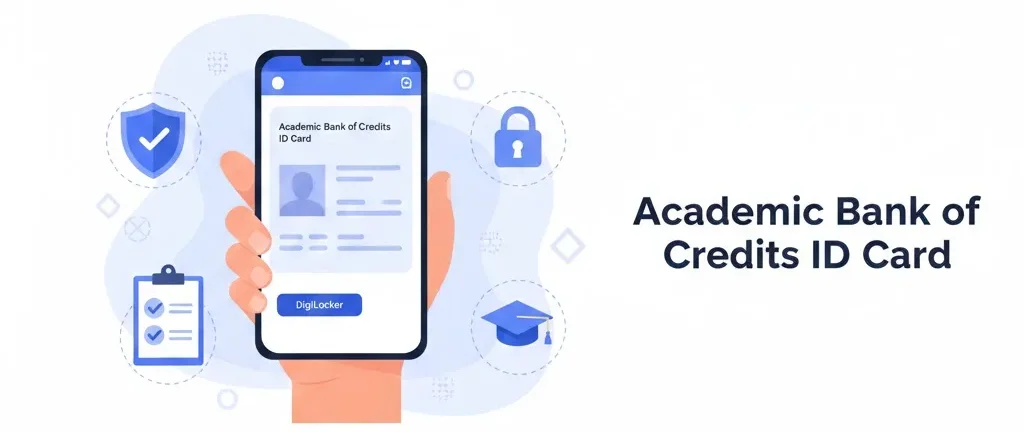
- Login to DigiLocker: Use your mobile number or Aadhaar to log in.
- Search for “Academic Bank of Credits”: Look for this under the “Education” section.
- Verify Aadhaar: Ensure your name and DOB match your Aadhaar exactly.
- Link to University: Select your college or university to sync your data.
Once finished, your digilocker abc will show your new ID card instantly.
Conclusion
In summary, the academic bank of credit is a game-changer for the Indian education system. It transforms how we earn, store, and transfer knowledge by putting the power back into the hands of the students. By leveraging digilocker abc, you ensure that every hour of your hard work is recorded and recognized, regardless of life’s interruptions.
This system effectively bridges the gap between formal university education and the growing world of online learning. It is time to embrace this digital shift and take full ownership of your educational path with confidence. Is your ABC ID ready? If not, head over to DigiLocker today and secure your academic future for a brighter, more flexible tomorrow!

Frequently Asked Questions
1. Is the academic bank of credits mandatory for all students?
Yes, most higher education institutions in India now require an ABC ID for admissions and for issuing your final degree or diploma.
2. What is the main difference between APAAR ID vs ABC ID?
The APAAR ID is your permanent identity as a student, while the ABC ID is the specific account where your course credits are stored and managed.
3. Can I store my school certificates in Digilocker ABC?
While the academic bank of credits stores credits for higher education, Digilocker for students can be used to store school marksheets, certificates, and your APAAR ID.
4. How does the ABC NEP 2020 help in credit transfer?
It allows you to move from one university to another. The new university can verify and accept the credits you earned at your previous college through the digital system.
5. What are the top NEP 2020 benefits for students?
The top benefits include multiple entry and exit points, the ability to choose subjects from different streams, and the digital safety of your academic records.

- Power BI Course Online: The Skill That Turns Spreadsheets Into a Career - October 15, 2026
- Data Science Course with Placement: Is It Worth It or Just Marketing? - October 9, 2026
- What is ITC in GST: The Complete Guide You Need - September 26, 2026