What are the subjects taught in BBA Accounting and Finance?
Are you eyeing a BBA in Accounting and Finance? Great choice. But let’s skip the academic fluff. You aren't just signing up for a degree; you’re entering a "fin-tech" boot camp designed to turn you into a professional who actually understands how money moves in the real world. If you’ve ever wondered what goes on behind the scenes of a multi-million dollar merger or how companies stay bulletproof during tax season, these subjects are your playbook. 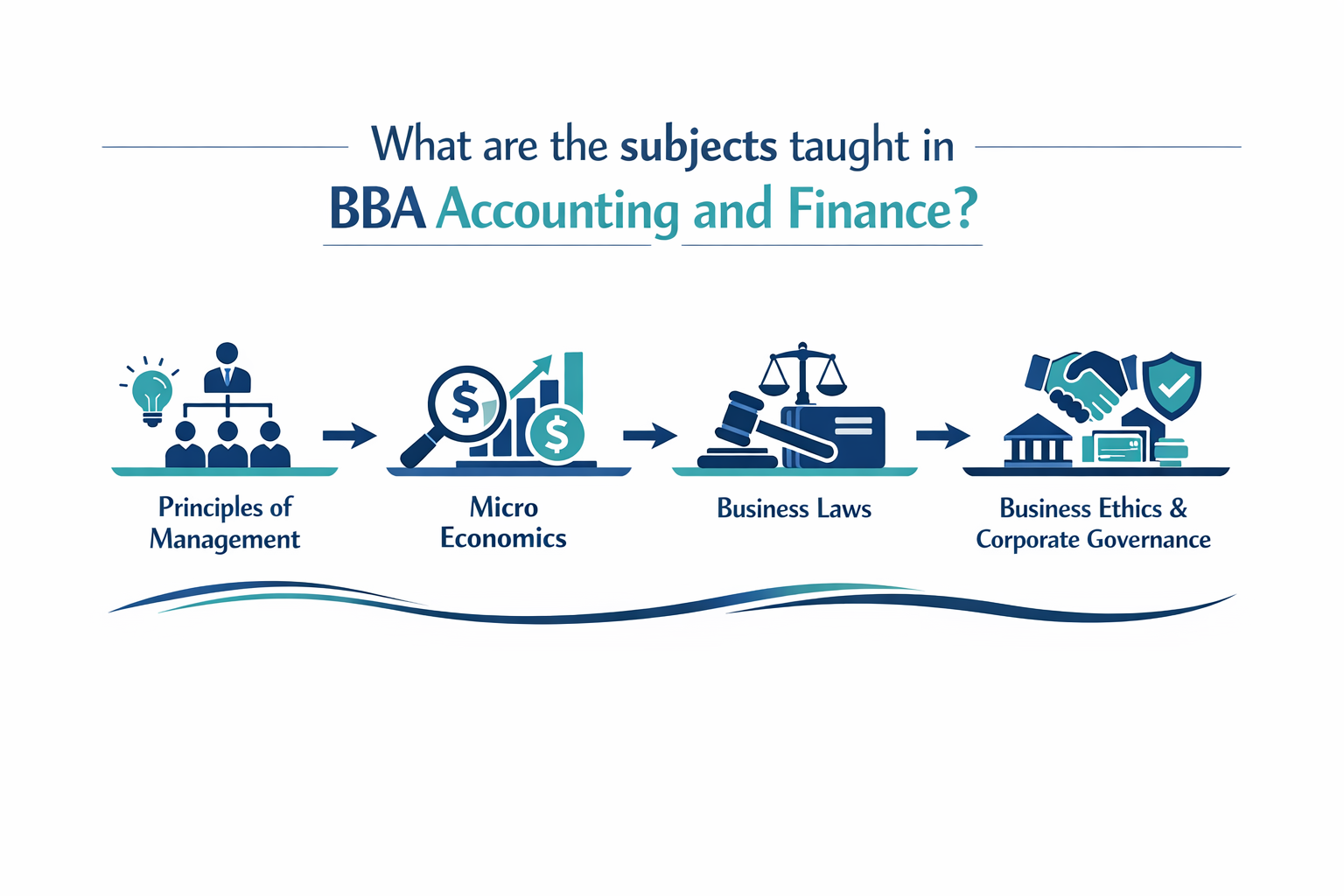 The Core Blueprint: Foundation Subjects. Before you can run a department, you have to understand the mechanics of business. Your first year usually feels like building the engine of a car. You'll dive into Principles of Management and Microeconomics to understand market behaviour. However, the real "deal" starts with Business Laws and Business Ethics & Corporate Governance.
The Technical Powerhouse: Tools of the Trade
Modern finance isn't done with a pencil and a ledger. It’s done with data. This is where your curriculum gets high-tech. You won't just learn theory; you’ll master Advanced MS Excel, TallyPrime, and Accounting with ERP Software.
Essential Software & Technical Skills
| Subject | Real-World Application | Why It Matters |
|---|---|---|
| TallyPrime | Day-to-day business accounting. | The industry standard for SMEs in India. |
| Advanced MS Excel | Financial modelling and forecasting. | If you can't build a pivot table, you're invisible to recruiters. |
| AI Tools in Finance | Automating repetitive data entry. | This is the future; learning to leverage AI makes you 10x faster. |
| Data Analytics Tools | Interpreting big data for trends. | Turns raw numbers into actionable business stories. |
Hardcore Accounting & Taxation
This is where the "Expertise" part of E-E-A-T kicks in. You will tackle Financial Accounting, Cost Accounting, and Indian Accounting Standards. But the real challenge? The simulations. Instead of just reading about taxes, you’ll engage in Direct Tax with Simulation and GST with Simulation. This means you’re actually filing mock returns and navigating the GST portal. 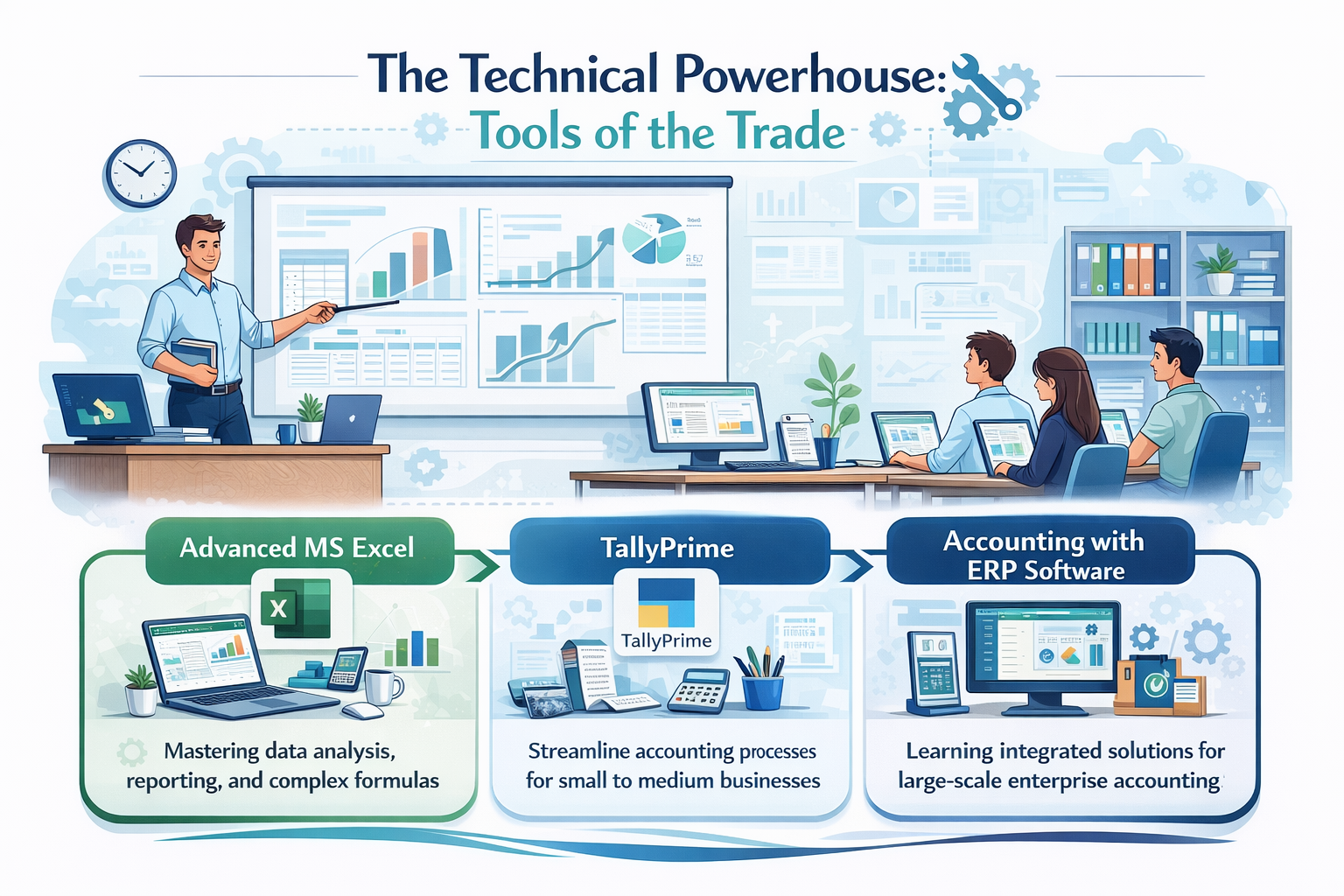
The "Compliance" Checklist
- MCA (Including XBRL & LLP): Understanding company filings and legal structures.
- Accounts Finalisation & Ratio Analysis: Learning how to tell if a company is actually healthy or just "looking" profitable.
- Banking & Auditing: The "detective work" of finance—ensuring every rupee is accounted for.
Why Specialisation is Your Competitive Edge
In today’s job market, a standard degree often isn't enough to stand out. Many students now seek specialised paths, such as the BBA in Finance and Accounting by ICA Edu Skills and Shobhit University. This program blends academic rigour with hands-on practice, focusing on industry-relevant tools and certifications. It’s designed to make you "job-ready" from day one, moving you beyond theory and into the actual workflows recruiters look for.
Bridging the Gap: Projects and Reality
A common pitfall for BBA students is getting "book smart" but "street-level confused." To combat this, your course includes a Virtual Office Project & Live Project. Think of this as a flight simulator for accountants. You’ll handle a Virtual Office setup, managing real-world scenarios without the real-world risk. The Internship / Project phase is your final hurdle. It’s where you take your knowledge of Business Finance and Entrepreneurship and apply it to a local firm or a corporate giant.
Key Takeaways
- Tech-First: Mastery of Business Computer Applications and AI tools is non-negotiable.
- Hands-On: Simulation-based learning (GST/Direct Tax) beats rote memorisation.
- Soft Skills: Business Communication is the "secret sauce" that helps you explain complex data to non-finance managers.
Conclusion
A BBA in Accounting and Finance isn't just about balancing sheets; it's about becoming a strategic advisor. From mastering TallyPrime to understanding Indian Accounting Standards, you are building a toolkit that is recession-proof. Ready to start? Focus on the tech, respect the ethics, and never stop analysing the data. 
Frequently Asked Questions
- Is BBA Finance harder than a regular BBA?
It’s more technical. While a regular BBA covers general management, Finance dives deep into math, taxation, and software like Excel and ERPs.
- Do I need to be a math genius for these subjects?
No. You need logical reasoning and comfort with numbers. Most of the heavy lifting is done by tools like Data Analytics Tools, provided you understand the logic behind them.
- What is the most important subject for my CV?
Employers crave candidates who know GST with Simulation, Advanced MS Excel, and ERP Software. These skills make you "job-ready" from Day 1.