.webp)
BBA vs BS Accounting & Finance
Choosing the right degree is the first big step toward a successful career in the corporate world. If you love numbers and business, you are likely stuck between two popular choices. Should you go for a BBA or a BS in Accounting and Finance? This guide will help you decide which path fits your goals best. 
BBA vs BS Accounting and Finance: Which is Better?
The direct answer to BBA or BS accounting and finance which is better depends on your career focus. A BBA is better if you want a broad management role with leadership opportunities. However, a BS in Accounting and Finance is superior if you want to become a technical specialist like a Chartered Accountant (CA) or Financial Analyst.
Get a BBA Degree with Paid Internship1-year paid internship + 10 Simulation Software + 4 Certifications to land high-paying roles |
|
| BBA in Accounting and Finance |
Understanding the Core Differences
While both degrees sit under the business umbrella, they offer very different learning experiences.
What is a BBA?
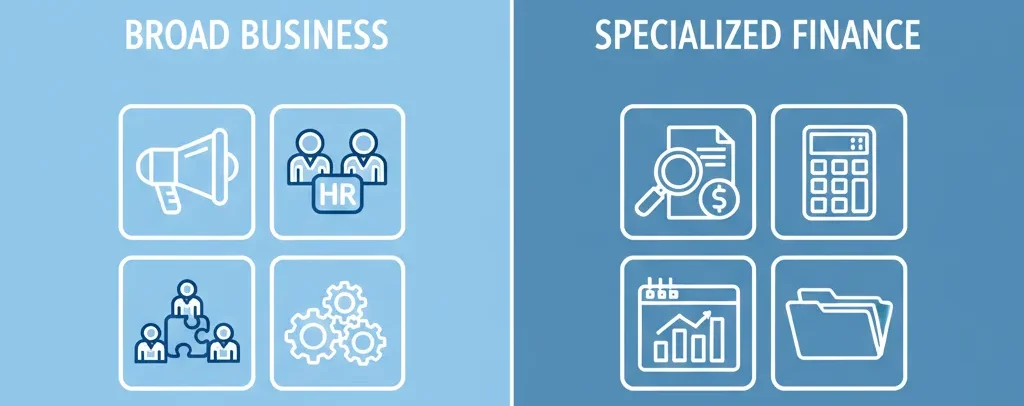
A Bachelor of Business Administration (BBA) is a generalist degree. It covers various aspects of running a business, such as marketing, human resources, and operations. It aims to build "soft skills" like leadership and effective communication. 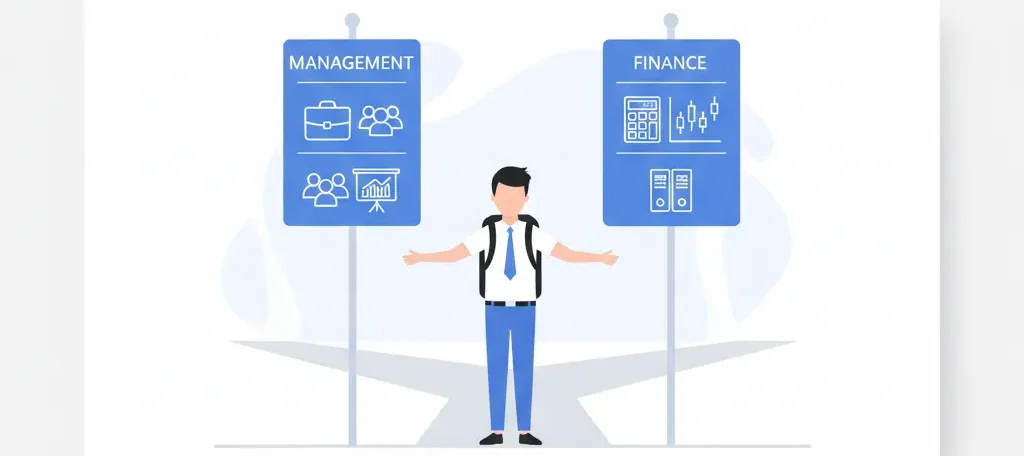
What is a BS in Accounting and Finance?
A Bachelor of Science (BS) in Accounting and Finance is a specialist degree. It is highly technical and math-oriented. You will dive deep into auditing, taxation, and financial risk management.
BBA vs. BS Accounting & Finance
| Feature | BBA (Management Focus) | BS Accounting & Finance (Technical Focus) |
|---|---|---|
| Primary Focus | General Management & Leadership | Technical Accounting & Data Analysis |
| Math Intensity | Moderate | High |
| Skill Set | Strategic Planning & Soft Skills | Quantitative Analysis & Auditing |
| Career Path | Marketing, HR, Operations Manager | Auditor, Tax Consultant, CFO |
| Versatility | High (Across various industries) | Targeted (Specific to finance sectors) |
Which Degree Should You Choose?
Choose BBA if:
- You enjoy leading teams and managing projects.
- You want a flexible career that isn't limited to just finance.
- You prefer a balance of qualitative and quantitative subjects.
Choose BS Accounting and Finance if:
- You have a strong passion for numbers and statistics.
- You aim for professional certifications like ACCA, CPA, or CFA.
- You want to work in high-stakes roles like investment banking or forensic accounting.

Online BBA by ICA Edu Skills and Shobhit University
If you want the best of both worlds, consider the CIA Plus + BBA program. This unique collaboration between ICA Edu Skills and Shobhit University bridges the gap between management and technical expertise. Unlike a traditional degree, this program focuses on 90% practical learning. You don't just study theory; you master industry tools like SAP, GST, and TallyPrime. The standout feature is the one-year paid internship, allowing you to gain professional experience while finishing your degree. It is a UGC-recognized path designed to make you "job-ready" in the age of AI.
Conclusion
Deciding between a BBA or BS accounting and finance which is better ultimately comes down to your strengths. If you see yourself as a future CEO or entrepreneur, the BBA offers the broad vision you need. If you want to be the financial backbone of a company, the BS is your best bet. 
Frequently Asked Questions
1. Can I do an MBA after a BS in Accounting and Finance?
Yes, absolutely. An MBA is a common next step for graduates of both degrees. A BS provides a strong analytical foundation that is highly valued in top-tier MBA programs.
2. Which degree has a higher starting salary?
Typically, BS graduates may start with slightly higher salaries in specialized roles like investment banking. However, BBA graduates often catch up as they move into high-level management positions.
3. Is an online BBA degree valid for government jobs?
Yes. As long as the degree is from a UGC-DEB approved institution, like Shobhit University, it is fully valid for all government exams and private sector jobs.