BBA vs BS Accounting
Choosing between a BBA vs BS Accounting is a major milestone for any aspiring professional. While both degrees lead to successful careers in the corporate world, they offer very different paths. One focuses on the "big picture" of business, while the other dives deep into financial data.
BBA vs BS Accounting
The main difference lies in the scope of study. A Bachelor of Business Administration (BBA) is a generalist degree that covers marketing, HR, and management. In contrast, a Bachelor of Science (BS) in Accounting is a specialist degree focused strictly on financial reporting, auditing, and taxation.
| Feature | BBA (General/Finance) | BS in Accounting |
|---|---|---|
| Focus | Leadership & Management | Technical Financial Data |
| Skillset | Soft skills & Strategy | Analytical & Quantitative |
| Career Path | Manager, Analyst, Entrepreneur | Auditor, Tax Consultant, CPA |
| Flexibility | High (Many Industries) | Targeted (Finance/Accounting) |
Get a BBA Degree with Paid Internship1-year paid internship + 10 Simulation Software + 4 Certifications to land high-paying roles |
|
| BBA in Accounting and Finance |
What is a BBA?
A BBA provides a broad understanding of how a company functions. You will study a little bit of everything. This includes operations, organizational behavior, and basic economics. It is ideal if you want to lead teams or start your own business.
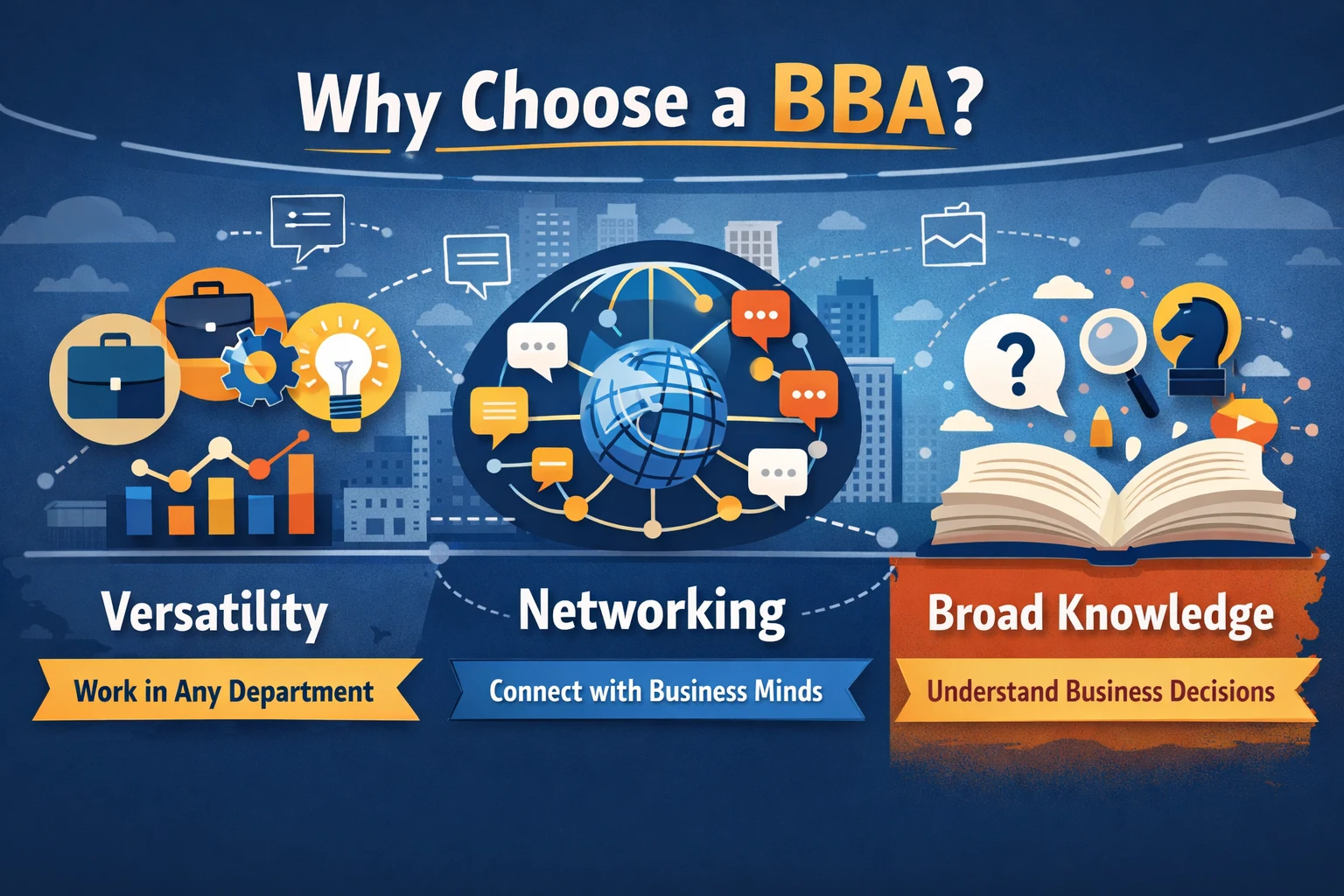
Why choose a BBA?
- Versatility: You can work in almost any department.
- Networking: You engage with peers from various business backgrounds.
- Broad Knowledge: You learn the why behind business decisions.
What is a BS in Accounting?
The BS in Accounting is all about the how. It prepares you for the technical side of money. You will spend time learning GAAP (Generally Accepted Accounting Principles) and complex tax laws.
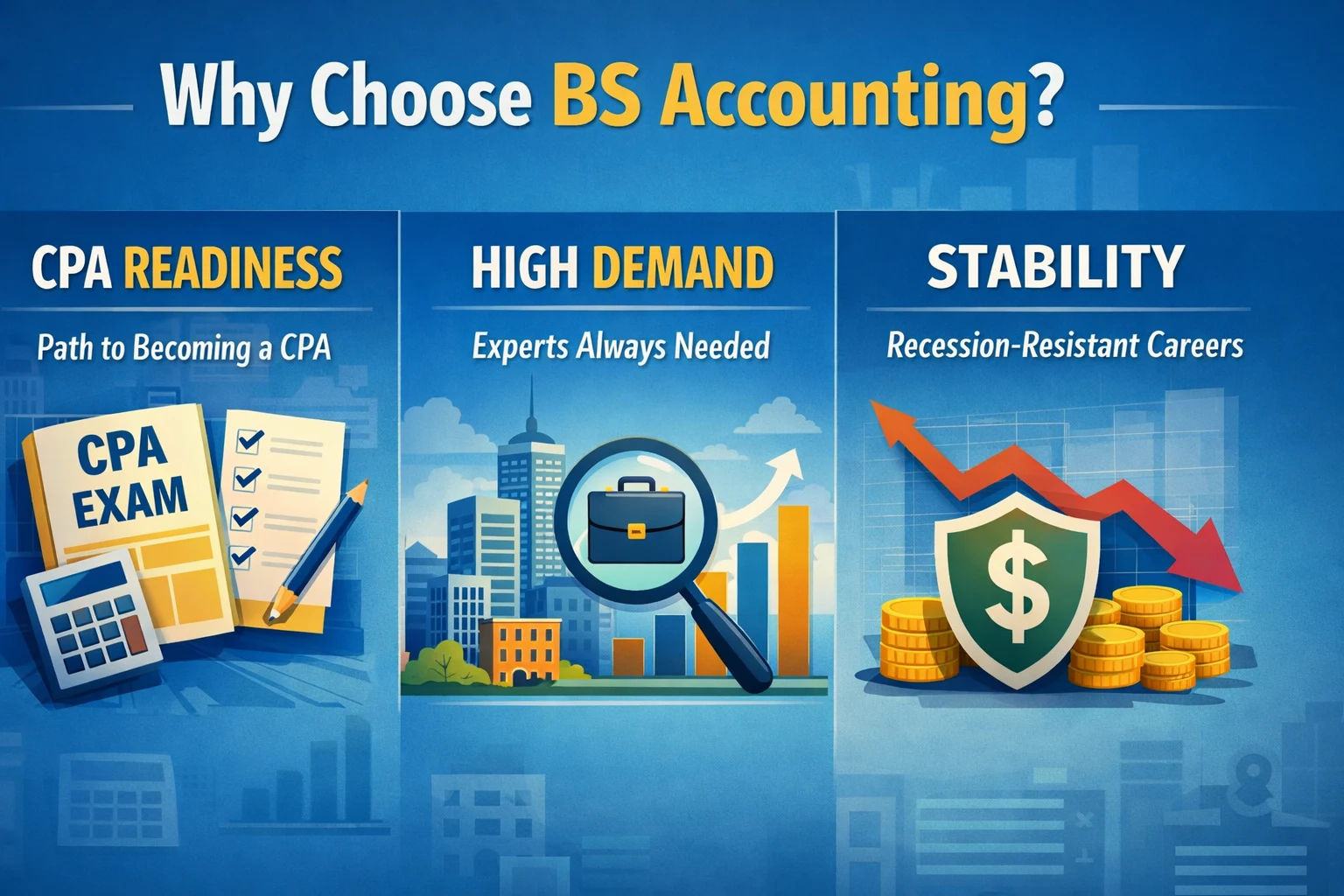
Why choose BS Accounting?
- CPA Readiness: This is the standard route if you want to become a Certified Public Accountant.
- High Demand: Companies always need experts to manage their books.
- Stability: Accounting roles are often more "recession-proof" than general management.
Key Differences to Consider
When comparing BBA vs BS Accounting, think about your daily tasks. Do you enjoy motivating people and looking at market trends? Then a BBA is likely your best bet. However, if you love finding patterns in numbers and ensuring accuracy, the BS in Accounting will be more rewarding.
BBA in Finance and Accounting by ICA Edu Skills and Shobhit University
If you want the best of both worlds, consider specialized programs. For instance, the BBA in Finance and Accounting by ICA Edu Skills and Shobhit University offers a unique blend. This program combines the leadership training of a BBA with the technical rigor of accounting. It is designed to make students industry-ready with practical skills that modern employers crave.
Conclusion
Ultimately, the choice depends on your career goals. A BS in Accounting is a straight line to a technical career. Meanwhile, a BBA offers a wider net. Many students now opt for an online BBA to maintain flexibility while gaining these essential skills. Both paths are valuable, so choose the one that aligns with your natural strengths. 
Frequently Asked Questions
1. Is BBA harder than BS Accounting?
Generally, BS Accounting is considered more mathematically rigorous. It involves specific technical rules. A BBA focuses more on theory, presentations, and case studies.
2. Can I become a CPA with a BBA?
Yes, but you may need to take extra accounting credits. A BS in Accounting usually covers all the requirements within the degree itself.
3. Which degree has a higher starting salary?
Both are competitive. Specialized accounting roles often have higher entry-level pay due to technical requirements. However, BBA graduates often have higher salary ceilings as they move into senior executive roles.