
5 high-paying jobs you can get with a BBA in Finance
Let’s be honest: the "starving student" trope is getting old. If you’ve chosen a BBA in Finance, you aren't just looking for a degree; you’re looking for a serious Return on Investment (ROI). The Indian financial landscape in 2026 is a battlefield. Between the tightening of Indian Accounting Standards (Ind AS) and the "GST 2.0" evolution, the market is cut-throat. Companies no longer care if you can recite the definition of "liquidity"; they want to know if you can manage it in a high-pressure environment. Here is the "insider" truth—a degree gets you the interview, but your ability to navigate a P&L statement gets you the BBA Finance salary you actually want. The secret? It’s 90% practical training. While your peers are buried in textbooks, the high-earners are mastering Excel, SQL, and real-world compliance. Let’s dive into the five career paths where that practical edge pays off—literally.
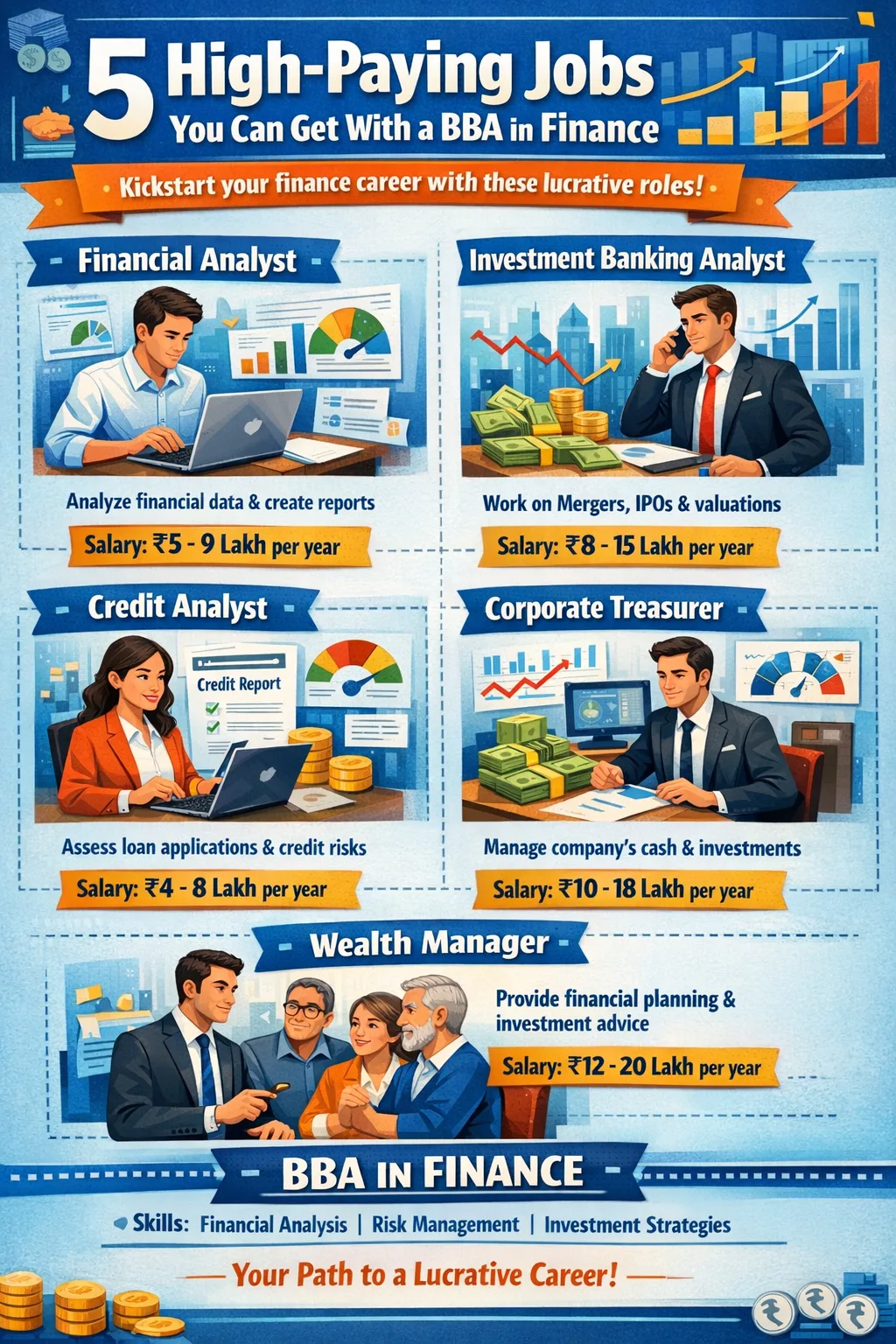
1. Financial Analyst: The Corporate Navigator
This is the "bread and butter" of the industry, but with a modern twist. As a Financial Analyst, you aren't just a number cruncher; you are a storyteller. You’ll spend your days in dashboards, building models that predict where a company’s money should go.
- The Reality Check: You will live in spreadsheets. If you don't like VLOOKUPs or pivot tables, this will feel like a marathon in wet jeans.
- Pro Tip: Don't just report the data. Suggest a solution. If expenses are up 10%, tell your manager why and how to cut them. That is how you jump from Junior to Senior.
| Metric | Details |
|---|---|
| Average Starting Salary | 4.5L – 7.5L per annum |
| Top Recruiters | Deloitte, KPMG, Amazon, Tata Motors |
| Outcome-Driven Skill | Financial Modelling & Data Visualisation |
2. Investment Banking Analyst: The High-Stakes Player
If you have a high caffeine tolerance and an obsession with the stock market, investment banking is the "gold medal" of jobs after bba finance. You’ll assist in Mergers and Acquisitions (M&A) and help companies raise capital.
- Hypothetical Case: Imagine a mid-sized Indian fintech startup wants to go public (an IPO). You are the one preparing the "pitch book," valuing the company, and ensuring the financial disclosures are airtight.
- The Pitfall: The "Burnout Wall." The pay is massive, but 70-hour weeks are common. It's a sprint, not a stroll.

3. Credit Analyst: The Risk Gatekeeper
Banks don't just hand out money; they need a reason to trust the borrower. As a Credit Analyst, you evaluate the "creditworthiness" of businesses. You’re the person who looks at a loan application and says, "This is a safe bet" or "This is a disaster waiting to happen."
- Practical Edge: In 2026, understanding GST compliance and CIBIL scoring logic is your secret weapon.
- Salary Outlook: A starting BBA Finance salary in credit analysis often hits the ₹6L mark, but bonuses based on portfolio performance can be substantial.
4. Corporate Treasurer: The Cash Flow Master
Every major corporation needs someone to manage its liquidity. A Corporate Treasurer ensures the company has enough cash to pay its bills while investing the surplus. In the context of corporate finance jobs salary trends, this role has seen a 15% uptick as companies prioritize "risk management."
Why this is a "Sleeper" Hit:
- Stability: Unlike trading, treasury is about consistency.
- Strategic Power: You work directly with the CFO to decide how to hedge against currency fluctuations.
5. Wealth Manager: The Relationship Architect
Wealth Management is where finance meets psychology. You manage the portfolios of High Net-Worth Individuals (HNIs). It’s not just about picking stocks; it’s about tax planning and retirement goals.
- Common Mistake: Thinking it’s only about sales. If you can't explain why a specific mutual fund fits a client's risk profile, they will take their crores elsewhere.
- Outcome: High commissions and the ability to build a personal brand.
| Pros of Wealth Management | Cons of Wealth Management |
|---|---|
| Unlimited commission potential | High pressure to meet client targets |
| Networking with influential people | Heavily dependent on market performance |
Why Practical Training Trumphs Theory
Let's talk about the elephant in the room: The Skill Gap. Most colleges teach you the history of banking. The market wants to know if you can use SAP FICO or navigate Financial Analyst Salary India negotiations with a portfolio of real-world projects.
- Stop Memorising, Start Modelling: Build a three-statement model for a company like Zomato. That's worth more than an A+ in "Introduction to Finance."
- Certification Over Decoration: A BBA is the foundation, but a NISM or basic Python-for-Finance certificate is the "pop" your resume needs.
- Learn the Law: With GST 2.0, knowing the latest tax filings is a high-income skill, not just a clerical task.
Final Thoughts
Landing a high BBA Finance salary isn't about being the smartest person in the lecture hall; it's about being the most useful person in the boardroom. The competition is fierce, and the theory-heavy graduates are getting left behind. Focus on hands-on training, master the tech, and treat your career like the high-growth asset it is. 
Frequently Asked Questions
- What is the average BBA Finance salary for freshers in India?
Typically, it ranges from 3.5L to 6L per annum, but specializing in niches like Investment Banking can push this to 10L+ even for beginners.
- Is a BBA in Finance better than a General BBA for high-paying jobs?
Yes. Specialised BBA graduates have a "clearer" career trajectory and are often preferred by top-tier financial firms.
- Can I get a high-paying job without an MBA?
Absolutely. While an MBA helps, entry-level roles in Credit Analysis and Financial Planning prioritise practical skills and certifications over an advanced degree.
- What are the top skills for a Financial Analyst in 2026?
Advanced Excel, SQL for data retrieval, and an understanding of the latest Indian Accounting Standards (Ind AS).